
Master Solutions Blog
Master Solutions has been serving the Naperville area since 1996, providing IT Support such as technical helpdesk support, computer support, and consulting to small and medium-sized businesses.


Artificial intelligence terminology is moving incredibly fast, and it is easy to feel overwhelmed by the constant influx of new buzzwords. You are likely just getting comfortable using tools like ChatGPT to help draft your weekly emails, and suddenly the industry is shifting the conversation toward agentic AI.
You do not need a computer science degree to navigate this shift, and you should not have your time wasted with mindless technology jargon. Let us look at what these two terms actually mean for your daily business operations.
0 Comments

The rise of artificial intelligence has fundamentally changed the cybersecurity game for small and medium-sized businesses. Cybercriminals now use generative AI to launch rapid, highly automated attacks that easily slip past traditional, outdated security software. As such, business owners must adapt quickly to protect their networks and financial assets from these advanced digital threats.
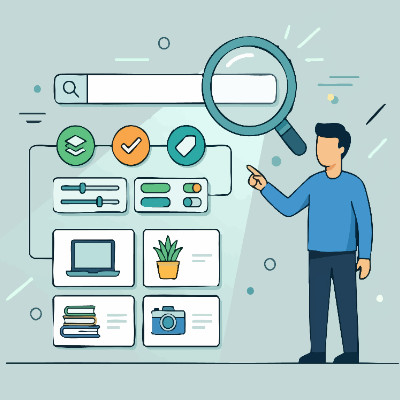
Google search results have undergone significant structural changes due to shifting corporate priorities. Organic search results are frequently pushed down the results page to prioritize sponsored advertisements, product carousels, and automated summaries. This current layout requires additional scrolling and filtering to access traditional web links.

I had a conversation with a client the other day—we were reviewing his quarterly IT strategy, and when I brought up artificial intelligence, he waved me off. He told me his company wasn’t "doing the AI thing yet," and he was absolutely certain his staff wasn't using it.
Out of curiosity, we took a quick peek at his network traffic logs.
Artificial Intelligence has taken up a reputation as the ultimate productivity booster, but it has also introduced a new layer to the phenomenon known as shadow IT… shadow AI. This occurs when employees use unauthorized, public AI tools to summarize meeting notes, write code, or analyze spreadsheets.
While their intentions are good, these employees (and yes, occasionally business leadership) often unknowingly upload proprietary company information to a public database they have no control over.
For years, the cybersecurity industry has coasted on the perception that zero-day vulnerabilities (bugs in software that the developers were not yet aware of) were not easy to find… but on April 6th, 2026, this perception shifted completely as Anthropic’s Claude Mythos AI model proved it very, very wrong.
Today’s threats are no longer the bugs we know about. They’re the thousands of previously unknown vulnerabilities that AI can identify (and weaponize) in mere moments.

Imagine one of your employees receives a phone call from someone who sounds exactly like you. They have your cadence, your "ums," and even that specific way you clear your throat before getting down to business. Would they be able to tell it’s a deepfake, or would they follow the instructions to urgently reset a password or move funds?
If you can’t answer that with an emphatic "yes," you’ve got some work to do. We’ve moved far beyond the era of the Nigerian Prince emails and obvious typos. We are now in the age of highly polished, AI-driven social engineering where the "bad guys" are using your own identity against your team.
I was working on a project the other day, and as I started typing out a summary, a little icon popped up in the margin of my Google Doc. It was Google’s AI, essentially asking me if I wanted help "refining" my thoughts.
If you use Google Workspace for your business, you’ve likely seen these "Help me write" prompts appearing. It’s part of the massive AI wave we’re seeing everywhere, but this one is right there in the middle of your workspace.

It might sound crazy, but sometimes I miss the Nigerian Prince. Back in the day, the threats were almost charming in their incompetence. You had the broken English, the bizarre formatting, and the royal promises that were so obviously fake they were almost funny. If you had even a shred of common sense, you were safe.
But those days are gone.
Running a small business in 2026 means you are essentially running a technology company, regardless of what your business is. The digital backbone of your operation—your payment processors, inventory systems, and customer databases—has become incredibly sophisticated, but that sophistication often brings a new level of technical headache. If you have recently heard the term AIOps and felt a wave of fatigue, you are certainly not alone.

Generative AI is no longer just the cool new thing; it’s a powerful tool for business growth that organizations like yours should be leveraging. If you don’t use AI, you’ll be at a disadvantage compared to your competitors who do, and that’s no good. That said, there’s a massive difference between those who dabble in AI and those who use it masterfully, and that difference is going to grow more significant over time.
Today, we’ve got five tips to help you use AI in a proficient way so you can beat out the competition.

For decades, Wikipedia has been the internet’s Old Reliable—the human-vetted gold standard for facts. But a high-stakes clash between veteran editors and the Open Knowledge Association (OKA) has just exposed a glitch in the Matrix: a surge of AI-generated hallucinations that threaten to poison the well of public knowledge.
What began as a noble quest to translate the world’s encyclopedia has morphed into a cautionary tale about the high cost of cheap information.

AI is undoubtedly a powerful tool, providing quick solutions for everything from summarizing lengthy meetings to imagining what our pets would look like as cartoon characters. However, this power comes at a significant environmental cost, with each interaction consuming massive amounts of energy. Understanding this impact is crucial for adopting more sustainable technology practices.

In the race to implement generative AI and predictive analytics, most organizations focus on the high-profile tasks: choosing a Large Language Model (LLM), fine-tuning the parameters they need to use, or designing sleek user interfaces. There is a gritty, structural reality that often brings these projects to a grinding halt before they even launch: data silos.

The old ways of working aren't just outdated, they’re a liability. As we navigate the mid-2020s, the “hustle harder” mantra has been replaced by a more sophisticated approach: algorithmic efficiency. If you’re still manually wrestling with your inbox or playing calendar Tetris, you’re running legacy software on modern hardware. This month, we thought we’d give you four tips to maximize your efficiency.

It sounds like the perfect get-out-of-jail-free card: “I’m so sorry for that error, the AI wrote it!” Unfortunately, that excuse works about as well today as the dog ate my homework in third grade. While AI is an incredible tool, you are still the one holding the leash. If your AI makes a mess, you’re the one who has to clean it up.
Let’s break down why AI makes mistakes and how those slips can turn into real-world headaches for your business.

As we push onward into 2026, it’s helpful to remember that the “good old days” are not necessarily as good as we remember them to be. When you would call your technology provider to deploy a patch or upgrade a system, you weren’t necessarily being “proactive”; you were being reactive without realizing it. In fact, managed service providers have evolved their model to reflect major disruptions in the tech industry.

For the modern enterprise, deploying artificial intelligence is less about buying a shiny new engine and more about high-performance fuel. AI thrives on information; if that input is fragmented or disorganized, your investment is essentially trying to navigate a fog with a broken compass.
Certain departments consistently struggle with IT, and one of them is Human Resources. HR is one of many departments that only works when you can ensure consistency. HR might be the people-centered part of your business, but when they are buried under compliance forms, payroll disputes, and other challenges, it’s easy to see why burnout is so prevalent.

Not all artificially intelligent tools are built the same. One disparity that can make all the difference is whether a particular tool you and your team use is public or private.
Let’s dive into the distinction and why it matters so much.
Mobile? Grab this Article