
Master Solutions Blog
Master Solutions has been serving the Naperville area since 1996, providing IT Support such as technical helpdesk support, computer support, and consulting to small and medium-sized businesses.


Every business relies on digital infrastructure to serve clients, process data, and stay profitable. Yet, basic operational realities about a business’ hardware and software are regularly ignored until a major disruption occurs. Ignoring these core principles leads directly to preventable expenses and downtime.
Let’s review these principles now.
0 Comments

Daily operations rely heavily on technology, but subtle oversights in hardware management and security protocols quietly create severe operational risks. Identifying these routine gaps allows your organization to safeguard critical data, empower employees, and extract maximum value from existing tools without unnecessary spend.

Few things derail a busy workday quite like dropped video calls, endless loading screens, or printing jobs that hang in digital limbo. If your office Wi-Fi struggles to keep up, the problem usually comes down to using residential hardware for commercial demands. Upgrading your setup makes all the difference.

Imagine buying a state-of-the-art sports car, leaving it in second gear, and using the back seat purely to store groceries. It sounds absurd, but that is precisely how millions of growing businesses approach their technology every day.

Artificial intelligence terminology is moving incredibly fast, and it is easy to feel overwhelmed by the constant influx of new buzzwords. You are likely just getting comfortable using tools like ChatGPT to help draft your weekly emails, and suddenly the industry is shifting the conversation toward agentic AI.
You do not need a computer science degree to navigate this shift, and you should not have your time wasted with mindless technology jargon. Let us look at what these two terms actually mean for your daily business operations.

If you walked into the headquarters of some of the fastest-growing small businesses today, you might not see rows of desktop towers, a reception desk, or a dedicated server room.
For a long time, running a business meant buying heavy computer hardware and leasing office space just to house it. Today, tying your operations to physical real estate and local servers limits your flexibility and creates unnecessary expenses.
Modern companies are moving away from traditional office setups entirely. Here is how you can run a flexible, fully mobile workforce without sacrificing security or operational control.

Deploying AI and automation across a business does not automatically improve revenue generation and profit margins. It is common to look at the current software landscape and treat new tools as a shortcut to bypass foundational strategy. Technology amplifies efficiency, but it cannot manufacture value out of thin air.

Keeping an organization operational for decades requires a shift in how you view your daily operations. Longevity is rarely achieved by chasing the newest enterprise software platforms or upgrading hardware cycles ahead of schedule. Sustainable growth comes from maximizing the assets you already own, protecting your information, and respecting the workforce using those tools.

Every technology provider has a list of core values plastered on their website. They love using words like efficiency, innovation, and speed. While we use these outcomes as much as anyone, I want to be completely candid about the real boundary line in modern IT. Right now, there is a constant conflict happening between security and convenience.
Convenience demands fewer clicks, shorter passwords, bypassed logins, and instant access to everything from any device. Security requires verification, data encryption, strict access parameters, and deliberate authentication checks. When these two forces collide, our engineering team operates under a strict rule: security wins over convenience every single time. This core mindset guides every decision we make when we work with our clients.

You know if you skip too many oil changes, it's going to cause long-term damage to your car, so why would you skip network maintenance?
Think about how most businesses handle their vehicles. You don't wait for the engine to seize up on the highway before you decide to look under the hood. You handle the oil changes, you check the brakes, and you rotate the tires. You do it because a broken-down van means missed deliveries, angry customers, and a massive, unexpected repair bill.
Yet, when it comes to technology, so many businesses run the engine until it literally smokes.

Every small business owner wants their technology to be a strategic advantage, but the unfortunate reality is that few actually get there. You might envision a workplace where your apps seamlessly integrate, all data is secured, and your employees can work without IT troubles, but without understanding where you currently sit on the IT maturation spectrum, it’s hard to get there.

The pressure to secure a business network is immense, but locking down digital environments too tightly can prevent staff from accessing necessary files and tools. Managing access effectively requires a balance between security and productivity.

When was the last time you consulted your team members about a planned technology change or investment? Never, right? Instead, you look at the metrics, balance the various return on investment figures, and determine whether to invest in a new platform.
However, a mere three months later, your entire team has largely abandoned the new platform and reverted to how things were done before. As frustrating as this situation is, it helps reveal a key issue: You and your team have different perspectives and priorities.
Business owners often invest heavily in threat detection suites to prevent security breaches. However, technology is only half the battle. High-end hardware and software cannot prevent a breach if an individual inside the organization provides access to a malicious actor.

A friend of mine runs a successful firm, and like many owners, he’s been looking for ways to trim overhead. He told me, with a bit of a proud grin, that he saved a few thousand dollars this year by simplifying his IT stack and letting go of his managed security plan in favor of a basic off-the-shelf antivirus.
He asked me if it was all essentially the same stuff anyway.

Business owners often invest in threat detection suites to prevent security breaches. However, technology is only half the battle. High-end hardware and software cannot prevent a breach if an individual inside the organization provides access to a malicious actor.

In 2026, technology isn't just a support department—it's the engine of your business. But as tools like AI and cloud computing become more accessible, the margin for error has narrowed. A single misstep can lead to data breaches, wasted budgets, or total operational paralysis.
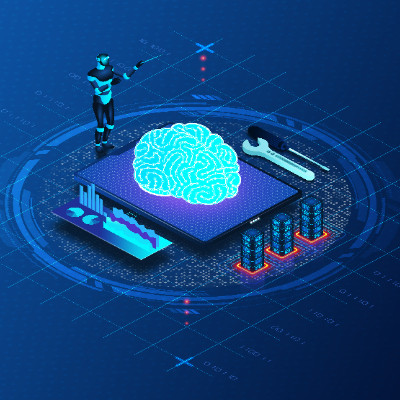
Running a small business in 2026 means you are essentially running a technology company, regardless of what your business is. The digital backbone of your operation—your payment processors, inventory systems, and customer databases—has become incredibly sophisticated, but that sophistication often brings a new level of technical headache. If you have recently heard the term AIOps and felt a wave of fatigue, you are certainly not alone.

For decades, Wikipedia has been the internet’s Old Reliable—the human-vetted gold standard for facts. But a high-stakes clash between veteran editors and the Open Knowledge Association (OKA) has just exposed a glitch in the Matrix: a surge of AI-generated hallucinations that threaten to poison the well of public knowledge.
What began as a noble quest to translate the world’s encyclopedia has morphed into a cautionary tale about the high cost of cheap information.

Even if you’re doing everything right, business cybersecurity is a challenge. Mistakes are common. Passwords are forgotten, and physical buttons can go missing. That said, there is one form of authentication that you can’t help but have with you: yourself.
Biometrics have been experiencing a surge in popularity as a means of authentication. Let’s explore why that is.
Mobile? Grab this Article