
Master Solutions Blog
Master Solutions has been serving the Naperville area since 1996, providing IT Support such as technical helpdesk support, computer support, and consulting to small and medium-sized businesses.
Why the Most Famous Cliché in All of IT Actually Works

Imagine your personal workspace after a frantic, demanding week of back-to-back projects. You likely have file folders stacked precariously, three half-empty coffee cups, and sticky notes clinging to every available surface. Eventually, finding a single pen becomes a monumental task.
Not unlike a cluttered workspace, when a computer runs for weeks without a break, background processes pile up and clog memory. This can create some truly irksome problems… problems that just so happen to have a somewhat infamous fix.
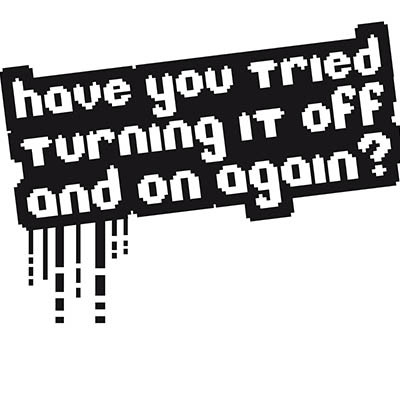
Yes, We’re Talking About Turning it Off and On Again
To understand this, it helps to picture your computer's memory—known as RAM—as a physical workbench. Every time you open an email, load a spreadsheet, or join a video call, your computer lays out tools and data on that workbench. When you close an app, it is supposed to clean off its spot on the bench, but no software’s code is ever perfect.
Small scraps of code get left behind in memory leaks.
After two or three weeks without a reboot, your workbench becomes covered in debris. Your computer slows down simply because it is running out of physical room to work. A restart completely wipes the workbench clean, dumping all the temporary clutter and starting fresh.
“Shut Down” is Not the Same as “Restart”
Here is a detail that surprises most business owners I talk to: shutting down your Windows PC at night isn’t the same as actually restarting it.
Modern versions of Microsoft Windows use a feature called Fast Startup. When you click "Shut Down," Windows saves the current state of its core background processes to your hard drive so the machine can boot up faster the next morning.
It is essentially a deep nap, meaning all those tiny background glitches get saved and reloaded the next day.
When you click "Restart," however, Windows bypasses Fast Startup. It fully closes every program, clears system memory entirely, and reloads the operating system cleanly.
The Right Way to Refresh Your Workstation
To give your computer a true clean slate, close your open documents and save your work.
Next, click the Start Menu, click the Power icon, and explicitly select Restart rather than Shut Down. Let the machine cycle through the reboot completely before logging back in.
Doing this just once a week—perhaps every Friday afternoon before heading home—prevents minor bugs from snowballing into midday crashes.
Transform Your Business Technology with Our Help
At Master Solutions, our goal is to provide proactive business technology support services to everyone who works with us. We’re here to help you get the highest possible value out of your technology.
If you are interested in learning more about the services we offer, please reach out at (630) 495-3830.
Mobile? Grab this Article
Comments